Pool Maintenance for Hotels: A Complete Operations Checklist
Hotel pool maintenance runs on three frequencies: daily water testing and chemical checks, weekly deep cleaning and shock treatment, and monthly full water changes and equipment inspection. A single commercial pool needs roughly 12–15 hours of staff time per week to stay guest-ready and pass health inspections.
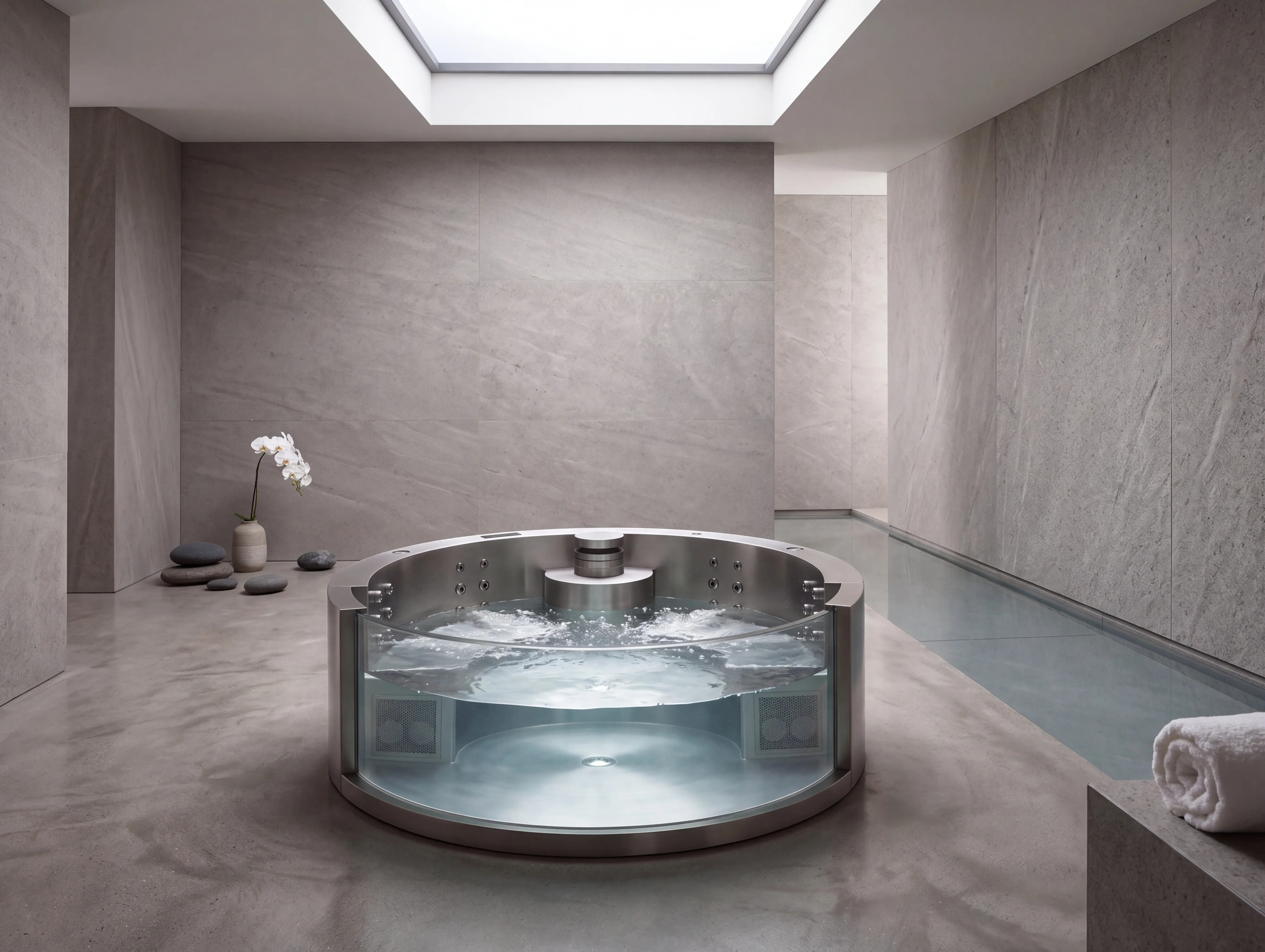
Hotel pool maintenance is not the same as taking care of a backyard pool. A commercial swimming pool at a hotel serves hundreds of guests each week, operates for 12–16 hours daily, and must meet health department standards consistently. When maintenance fails, the consequences go beyond cloudy water: negative guest reviews, health code violations, and emergency shutdowns that cost thousands in lost revenue. This guide provides a complete operational framework for maintaining hotel pools and spas at a professional standard.
Why Hotel Pool Maintenance Differs from Residential
A residential pool might see 3–5 swimmers on a busy day. A hotel pool sees 50–150. That difference in bather load changes everything about how you approach water chemistry, filtration schedules, and equipment durability. Here are the key factors that set commercial pool maintenance apart:
- Bather load: Commercial pools need 3–5 times more sanitizer turnover than residential pools because organic contaminants — sweat, sunscreen, cosmetics — enter the water at a much higher rate. A standard residential chlorine residual of 1–3 ppm is inadequate for a hotel pool, which typically requires 3–5 ppm free chlorine or 4–6 ppm bromine.
- Regulatory compliance: Most jurisdictions require commercial pools to pass health department inspections at least twice per year. Records of daily chemical readings, filter backwash cycles, and incident reports must be maintained and available for inspection. A failed inspection can result in immediate pool closure until violations are corrected.
- Equipment duty cycle: Residential pool pumps run 6–8 hours per day. Commercial pumps in hotel applications often run 18–24 hours. This places far greater demand on seals, impellers, and motors, which means preventative replacement schedules need to be tighter and spare parts need to be kept on site.
- Guest safety liability: A slip-and-fall incident or waterborne illness outbreak at a hotel pool carries legal and reputational risk far beyond what a homeowner faces. Your maintenance logbook is a legal document — treat it as such.
Hotel Pool Maintenance: Daily Checklist
A disciplined daily routine is the foundation of professional hotel pool maintenance. The following checklist takes 20–30 minutes per pool and should be completed before the pool opens to guests each morning. Assign a primary technician and a backup to ensure coverage seven days per week.
Morning Water Quality Checks
Water testing is the first task every morning — before guests enter the water, before chemical adjustments are made. Test and record the following parameters using a commercial-grade test kit or photometer (test strips are not accurate enough for commercial use):
- Free chlorine: Target 3–5 ppm. If below 3 ppm, calculate the required dose and add immediately. If above 5 ppm, delay pool opening until levels drop to safe range.
- pH: Target 7.2–7.8. pH outside this range reduces chlorine effectiveness (below 7.2 causes eye irritation; above 7.8 makes chlorine nearly inactive).
- Total alkalinity: Target 80–120 ppm. Alkalinity buffers pH against sudden shifts caused by heavy bather load or rainwater.
- Water temperature: Record and verify against the set point. Temperature deviations often indicate a failing heat pump or circulation issue. For commercial swim spa maintenance, temperature consistency is even more critical due to the smaller water volume.
- Water clarity: You should be able to clearly see the main drain from the pool deck. If you cannot, the pool should not open until the cause is identified and resolved.
Chemical Dosing Schedule
Chemical dosing in a commercial hotel pool should follow a predictable schedule based on measured values, not guesswork. Automated chemical feeders and controllers are strongly recommended for any hotel pool — they continuously monitor and adjust sanitizer and pH levels, reducing both chemical waste and the risk of human error.
For manual dosing, follow this sequence: adjust total alkalinity first, then pH, then sanitizer. Never mix chemicals directly — add each to the pool water separately, allowing at least 15 minutes of circulation between additions. Record every chemical addition in the pool log with the product name, amount added, time, and the technician's initials.
Shock treatment should be performed at least weekly in a commercial pool, and more frequently during periods of high bather load or after incidents of fecal contamination. Use a non-chlorine shock (potassium monopersulfate) for routine oxidation, reserving chlorine shock for contamination events. After shocking, the pool must remain closed until chlorine levels return to the safe operating range.
Filter and Pump Inspection
The circulation system is the heart of your hotel pool maintenance program. A quick daily inspection catches problems before they become failures:
- Filter pressure gauge: Record the pressure reading. A rise of 8–10 PSI above the clean-filter baseline indicates the filter needs backwashing. A sudden pressure drop may indicate a pump issue or air leak.
- Pump operation: Listen for unusual noise — grinding, screeching, or cavitation sounds signal bearing wear or impeller damage. Check for water leaks around the pump seal.
- Skimmer baskets and strainers: Empty debris from all skimmer and pump strainer baskets. Blocked strainers reduce flow rate and increase pump workload, shortening equipment life.
- Flow meter reading: If your system has a flow meter, record the reading. A declining flow rate over time indicates progressive filter loading or pump wear.
Weekly and Monthly Maintenance Tasks
Beyond the daily routine, a set of weekly and monthly tasks ensures long-term water quality and equipment reliability:
Weekly tasks (allow 1–2 hours): Backwash sand or DE filters thoroughly; clean cartridge filters with a filter degreaser; brush pool walls, floor, and steps to prevent algae adhesion; vacuum the pool floor and any dead zones where debris accumulates; inspect all handrails, ladders, and diving boards for loose fittings or corrosion; test and record calcium hardness (target 200–400 ppm for commercial pools) and total dissolved solids (TDS — if TDS exceeds 1,500 ppm above source water, plan a partial drain and refill).
Monthly tasks (allow 2–3 hours): Perform a complete water chemistry panel including cyanuric acid levels (if using stabilized chlorine — keep below 50 ppm in commercial pools, as high CYA reduces chlorine efficacy dramatically); inspect and clean the heat pump or heater, checking for debris around the coil and verifying thermostat calibration; remove and inspect all jet fittings, cleaning any mineral deposits with a descaling solution; review the maintenance logbook for trends — a gradual increase in chemical consumption or decreasing filter cycle times can indicate developing problems; test ground fault circuit interrupters (GFCIs) on all pool electrical circuits.
For properties operating commercial swim spas alongside traditional pools, coordinate maintenance schedules so that both systems are serviced on the same day. This minimizes guest disruption and allows a single technician to work efficiently across both water bodies.
UV LED Disinfection: The Modern Standard for Hotel Pools
Ultraviolet disinfection has moved from a premium add-on to a standard specification in commercial hotel pool design — and for good reason. UV systems inactivate 99.9% of chlorine-resistant pathogens, including Cryptosporidium and Giardia, which are the most common causes of recreational water illness outbreaks in hotels. Traditional chlorine alone requires hours of contact time to neutralize Cryptosporidium; UV does it in seconds.
Modern UV LED systems offer several advantages over traditional mercury-vapor UV lamps: they consume 60–70% less energy, have no warm-up period (instant full output), contain no mercury (eliminating hazardous waste disposal requirements), and have a lifespan of 10,000–15,000 hours compared to 8,000–9,000 for traditional lamps. The initial equipment cost is higher — expect to pay $800–$1,500 for a commercial-grade UV LED unit versus $400–$800 for a comparable mercury-vapor unit — but the energy savings and longer replacement interval produce a lower total cost of ownership over a 5-year operating period.
UV disinfection works as a secondary sanitizer alongside a chlorine or bromine residual. The UV chamber treats water as it passes through the circulation loop before returning to the pool. It does not replace chemical sanitizers — a residual is still required to handle contaminants introduced between passes through the UV system — but it dramatically reduces the chemical demand and provides protection against pathogens that chlorine alone cannot handle at practical concentrations.
For hotels that operate both a main pool and a spa or plunge pool, a single UV system can be sized to handle the combined flow, or dedicated units can be installed on each circulation loop. The latter approach is recommended when the spa operates at a significantly different temperature, as the higher water temperature in spas accelerates pathogen growth and justifies independent disinfection capacity.
How to Choose a Commercial Pool Supplier for Your Hotel
The quality of your pool equipment directly determines how much maintenance your team will face over the life of the installation. When evaluating commercial pool suppliers, look beyond the initial quote and assess the total maintenance burden the equipment will create:
- Material quality: Marine-grade stainless steel (304 or 316) structures resist corrosion far longer than powder-coated steel or aluminum in the humid, chlorine-rich environment of a pool equipment room. The small premium in material cost is recovered many times over in avoided replacement and repairs.
- Pump and filtration sizing: Undersized equipment runs harder and fails sooner. A supplier who recommends the minimum-spec pump is optimizing for their quote price, not your operational cost. Commercial pools should target a turnover rate of 4–6 hours (the entire water volume passes through filtration every 4–6 hours).
- Control system capability: A commercial-grade digital controller with remote monitoring allows your maintenance team to check chemical levels, water temperature, and equipment status from a smartphone. This reduces the frequency of physical walk-throughs and enables faster response when something goes wrong outside of operating hours.
- Spare parts availability: Ask every supplier about their spare parts inventory and shipping time for common wear items: pump seals, filter cartridges, control boards, and gaskets. A supplier who cannot ship these within 5–7 business days is not equipped to support commercial operations.
For hotel groups planning multiple properties, standardizing on a single supplier and equipment platform simplifies maintenance training, reduces the spare parts inventory you need to carry, and creates leverage for volume pricing on both equipment and consumables.
Hotel Swimming Pool Maintenance Costs
Annual maintenance costs vary significantly by pool size, water quality requirements and local utility rates. The main cost drivers are chemical and sanitizer consumption, staff labor for testing and cleaning, and periodic equipment replacement. Stainless steel construction typically reduces long-term maintenance expenses compared to acrylic or fiberglass alternatives.
Frequently Asked Questions
How often should hotel pools be serviced?
At minimum, hotel pools require daily water quality checks, weekly deep cleaning (brushing, vacuuming, filter inspection), and monthly comprehensive maintenance (full chemistry panel, equipment inspection, logbook review). Quarterly professional servicing by an HVAC or pool equipment specialist is recommended for heat pumps, UV systems, and control panels. The daily routine takes 20–30 minutes per pool; weekly tasks take 1–2 hours; monthly maintenance takes 2–3 hours. For a mid-size hotel with one pool and one spa, budget approximately 12–15 hours of staff time per week for comprehensive commercial pool maintenance.
What chemicals are needed for commercial pool maintenance?
A commercial hotel pool requires the following chemical categories: a primary sanitizer (chlorine — typically calcium hypochlorite granules or tablets, or liquid sodium hypochlorite; or bromine for indoor pools and spas), pH adjusters (sodium carbonate to raise pH, sodium bisulfate or muriatic acid to lower pH), total alkalinity increaser (sodium bicarbonate), calcium hardness increaser (calcium chloride), shock treatment (potassium monopersulfate for routine oxidation, calcium hypochlorite for contamination events), algaecide (a quaternary ammonium or polyquat-based product for preventative use), and filter cleaning solutions (acid-based for mineral scale, alkaline-based for oils and grease). A stainless steel pool or spa requires pH-neutral cleaners — never use abrasive cleaners or bleach-based products on stainless steel surfaces.
How much does hotel pool maintenance cost per year?
Annual hotel pool maintenance costs vary significantly by pool size, water quality requirements and local utility rates. The main cost drivers are chemical and sanitizer consumption, staff labor, and periodic equipment replacement. Stainless steel and UV-equipped systems typically reduce long-term maintenance expenses.